


Observing cell-cell interactions is critical to understanding causative factors of biological outcomes. As the only benchtop platform capable of multiplexing >40 markers in tissue, CODEX® (rebranded to PhenoCycler™) uniquely enables these observations by assaying tissue biopsies using fluidics, an inverted microscope, oligo-conjugated antibodies, and fluorescent reporters. In this webinar, we will demonstrate CODEX single-cell spatial phenotyping using Seurat- one of the most widely used open-source platforms for single-cell RNA analysis. In addition, we will cover how to perform cellular neighborhood analysis adapted from Garry Nolan’s lab.
What you will learn
- How CODEX enables tissue multiplexing of 60 markers with single-cell resolution.
- How to read and analyze CODEX data with Seurat.
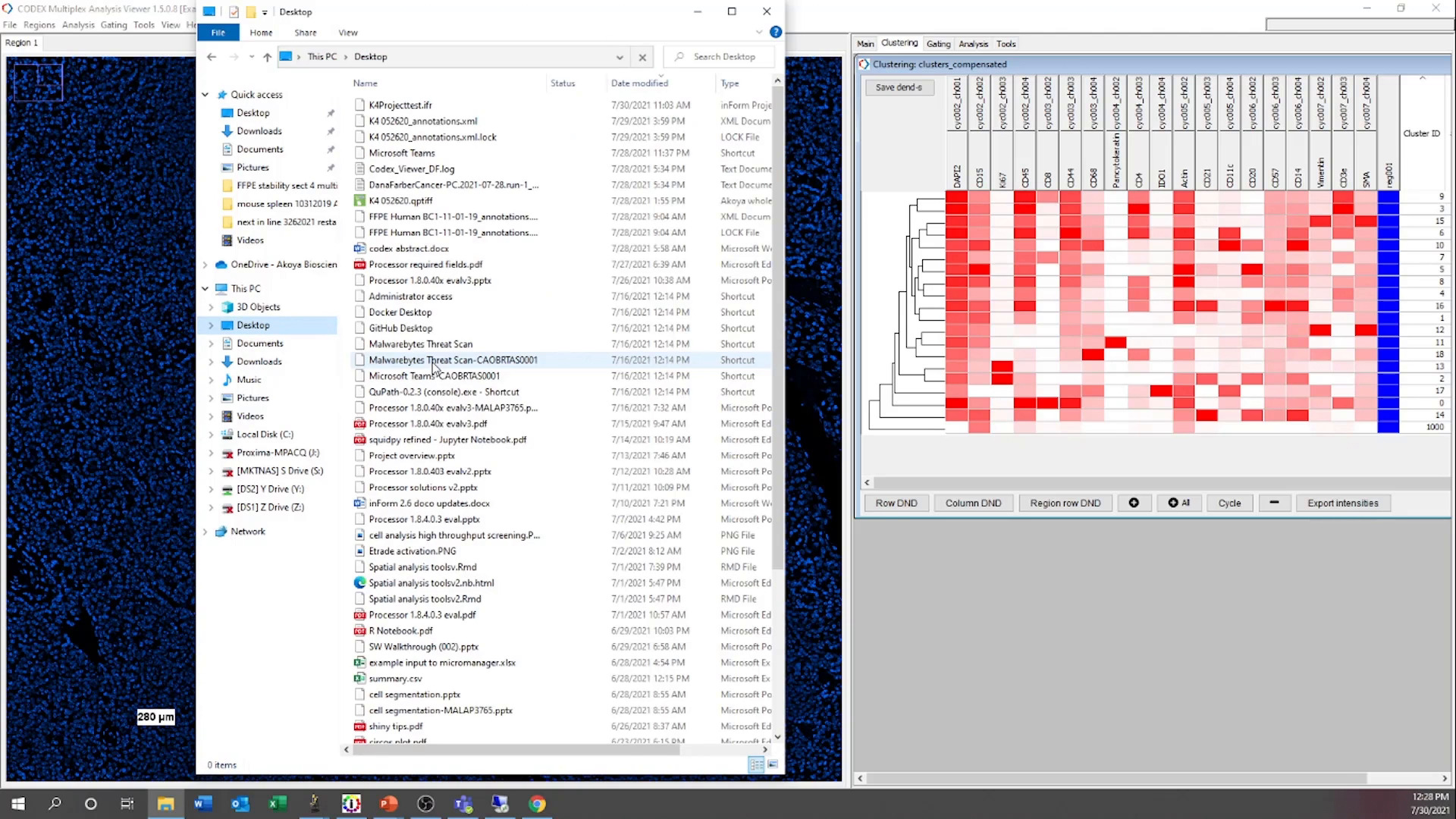
- How to visualize cell neighborhoods with CODEX MAV.
Related Posts

Accelerate Building Custom Spatial Proteomic Panels for New Biological Insights

Ultrasensitive Neuroimmune Biomarker Measurement for Translational Research and Therapeutic Development

Underdiagnosis of Alzheimer’s disease pathology in patients with cardiovascular disease

Decoding Neurodegeneration: High-plex Spatial Proteomics Reveal Distinct Cell Phenotypes and Pathological Signatures in Parkinson’s and Alzheimer’s Disease
In this webinar, Dr. Birgitt Schuele, Associate Professor (Research) of Pathology at Stanford University, showcases how ultrahigh-plex spatial proteomics is being used to uncover distinct cell phenotypes and pathological signatures…

Understanding the Brain: Advancing Neurodegeneration Research with Ultrahigh-Plex Spatial Proteomics
In this webinar, learn how ultrahigh-plex spatial phenotyping has been applied to neurodegenerative disease research.

p-Tau 205 and p-Tau 212: Emerging Biomarkers for Alzheimer’s Disease Research

Spatial Awareness: AI-powered Profiling of Trillions of Immune Cell Distribution Data Points Reveals Key Predictors of Cancer Recurrence Risk
This webinar highlights a groundbreaking study recently published as a Nature cover story (April 2025). Dr. Joe Yeong will describe how a pre-designed analytical framework—driven by well-defined clinical and scientific…

Multimodal Single-Cell Spatial Transcriptomics and Proteomics to Uncover the Biological Processes Driving Immunotherapy Response and Resistance in Renal Cancer
In this webinar, Dr. Anne-Laure Cattin from the Cancer Dynamics Laboratory at The Francis Crick Institute in London, will share her research on kidney cancer, focusing on the integration of…