Tau Kit
Our SIMOA® Tau Kit is designed for the measurement of Tau in serum, human plasma and CSF. Click here to…
Posted on
Alzheimer’s & Dementia: Diagnosis, Assessment & Disease Monitoring | June 2, 2021
Ashton NJ, Suárez-Calvet M, Karikari TK, Lantero-Rodriguez J, Snellman A, Sauer M, Simrén J, Minguillon C, Fauria K, Blennow K and Zetterberg H
Alzheimer’s & dementia (Amsterdam, Netherlands). 2021;13:e12168
DOI: https://doi.org/10.1002/dad2.12168
This study was performed using Simoa Homebrew assays.
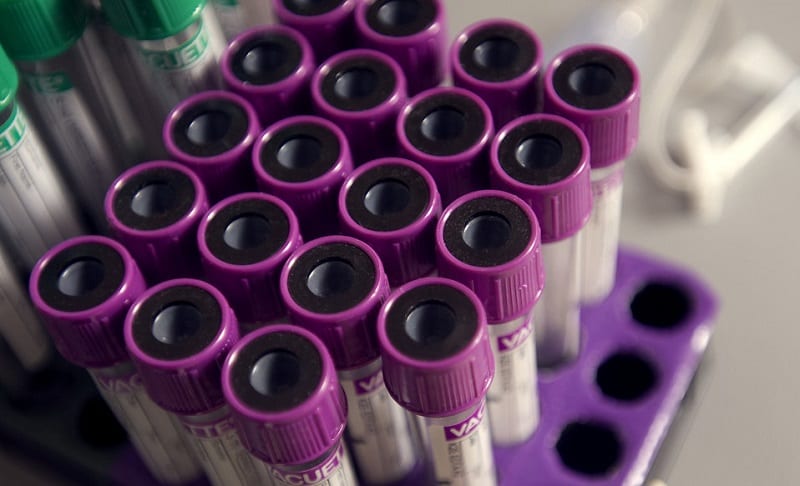
We tested how tube types (ethylenediaminetetraacetic acid [EDTA], serum, lithium heparin [LiHep], and citrate) and freeze–thaw cycles affect levels of blood biomarkers for Alzheimer’s disease (AD) pathophysiology, glial activation, and neuronal injury.
Amyloid beta (Aβ)42, Aβ40, phosphorylated tau181 (p-tau181), glial fibrillary acidic protein, total tau (t-tau), neurofilament light, and phosphorylated neurofilament heavy protein were measured using single molecule arrays.
LiHep demonstrated the highest mean value for all biomarkers. Tube types were highly correlated for most biomarkers (r > 0.95) but gave significantly different absolute concentrations. Weaker correlations between tube types were found for Aβ42/40 (r = 0.63–0.86) and serum t-tau (r = 0.46–0.64). Freeze–thaw cycles highly influenced levels of serum Aβ and t-tau (P < .0001), and minor decreases in EDTA Aβ40 and EDTA p-tau181 were found after freeze–thaw cycle 4 (P < .05).
The same tube type should be used in research studies on blood biomarkers. Individual concentration cut-offs are needed for each tube type in all tested biomarkers despite being highly correlated. Serum should be avoided for Aβ42, Aβ40, and t-tau. Freeze–thaw cycles > 3 should be avoided for p-tau181.
Neurology
Poster Background Developing effective therapies for glioblastoma (GBM) relies on robust preclinical animal models that enable detailed investigation of tumor biology, discovery of therapeutic targets, and evaluation of new treatment…
Oncology
Poster Background Ultrahigh-Plex Single-cell Spatial Phenotyping has revealed valuable insights into the tumor immune microenvironment (TiME) for biomarker discovery and stratification of clinical responses. Metabolic reprogramming is a key hallmark…
Neurology
Alzheimer’s Research and Therapy | August 26, 2024 Sampani K, Ness S, Tuz-Zahra F, Aytan N, Spurlock EE, Alluri S, Chen X, Siegel NH, Alosco ML, Xia W, Tripodis Y,…
Neurology
Poster The intersection of new therapeutic options for Alzheimer’s disease (AD), the emergence of accurate blood-based tests for AD, and the anticipated health system log jam for confirmatory diagnostic testing…
Neurology
Alzheimer’s & Dementia | August 3, 2024 Verberk IMW, Jutte J, Kingma MY, Vigneswaran S, Gouda MMTEE, van Engelen MP, Alcolea D, Arranz J, Fortea J, Lleó A, Chevalier C,…
Neurology
Journal of Lipid Research | August 2, 2024 Becktel DA, Frye JB, Le EH, Whitman SA, Schnellmann RG, Morrison HW, Doyle KP. J Lipid Res. 2024 https://doi.org/10.1016/j.jlr.2024.100614 Abstract Ischemic stroke…
Our SIMOA® Tau Kit is designed for the measurement of Tau in serum, human plasma and CSF. Click here to…
Amyloid Beta 42 (Aβ42) assays are SIMOA® assay kits for the measurement of the Aβ42 proteolytic product in human plasma.…
The AMYLOID BETA 40 (Aβ40) assays are SIMOA® assay kits for the measurement of the 40aa proteolytic product from the…
NF-LIGHT®, our Nfl assay, is an immunoassay kit for the ultra-sensitive measurement of neurofilament light levels in serum, plasma and…
Our GFAP assay kit provides ultra-sensitive detection of Glial Fibrillary Acidic Protein in plasma and CSF for neurology research. Click…
The new P-TAU181 assays are SIMOA® assay kits that target the proline rich region of the human Tau protein in…