p-Tau 181 Assay
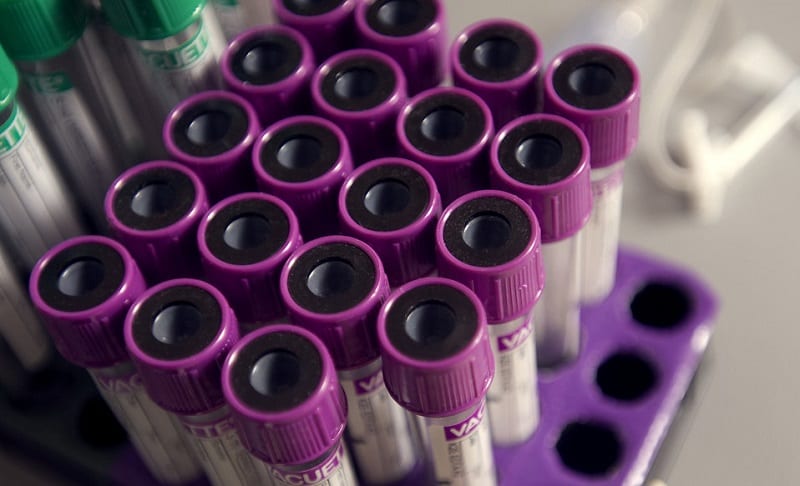
The new P-TAU181 assays are SIMOA® assay kits that target the proline rich region of the human Tau protein in…
Posted on
Koychev I, Jansen K, Dette A, Shi L and Holling H
J Alzheimers Dis. 2020 Nov 24
DOI: 10.3233/JAD-200900
Abstract
Background: The Amyloid Tau Neurodegeneration (ATN) framework was proposed to define the biological state underpinning Alzheimer’s disease (AD). Blood-based biomarkers offer a scalable alternative to the costly and invasive currently available biomarkers. Objective:In this meta-analysis we sought to assess the diagnostic performance of plasma amyloid (Aβ 40, Aβ 42, Aβ 42/40 ratio), tangle (p-tau181), and neurodegeneration (total tau [t-tau], neurofilament light [NfL]) biomarkers.
Methods: Electronic databases were screened for studies reporting biomarker concentrations for AD and control cohorts. Biomarker performance was examined by random-effect meta-analyses based on the ratio between biomarker concentrations in patients and controls.
Results: 83 studies published between 1996 and 2020 were included in the analyses. Aβ 42/40 ratio as well as Aβ 42 discriminated AD patients from controls when using novel platforms such as immunomagnetic reduction (IMR). We found significant differences in ptau-181 concentration for studies based on single molecule array (Simoa), but not for studies based on IMR or ELISA. T-tau was significantly different between AD patients and control in IMR and Simoa but not in ELISA-based studies. In contrast, NfL differentiated between groups across platforms. Exosome studies showed strong separation between patients and controls for Aβ 42, t-tau, and p-tau181.
Conclusion: Currently available assays for sampling plasma ATN biomarkers appear to differentiate between AD patients and controls. Novel assay methodologies have given the field a significant boost for testing these biomarkers, such as IMR for Aβ, Simoa for p-tau181. Enriching samples through extracellular vesicles shows promise but requires further validation.
Poster Background Reliable and reproducible antibody barcoding is critical for spatial biology workflows onthe Akoya PhenoCycler®-Fusion 2.0 (PCF). We evaluated and optimized a complementarychemistry to the existing Antibody Conjugation Kit…
Neurology
Poster Background Developing effective therapies for glioblastoma (GBM) relies on robust preclinical animal models that enable detailed investigation of tumor biology, discovery of therapeutic targets, and evaluation of new treatment…
Oncology
Poster Background Ultrahigh-Plex Single-cell Spatial Phenotyping has revealed valuable insights into the tumor immune microenvironment (TiME) for biomarker discovery and stratification of clinical responses. Metabolic reprogramming is a key hallmark…
Neurology
Alzheimer’s Research and Therapy | August 26, 2024 Sampani K, Ness S, Tuz-Zahra F, Aytan N, Spurlock EE, Alluri S, Chen X, Siegel NH, Alosco ML, Xia W, Tripodis Y,…
Neurology
Poster The intersection of new therapeutic options for Alzheimer’s disease (AD), the emergence of accurate blood-based tests for AD, and the anticipated health system log jam for confirmatory diagnostic testing…
Neurology
Alzheimer’s & Dementia | August 3, 2024 Verberk IMW, Jutte J, Kingma MY, Vigneswaran S, Gouda MMTEE, van Engelen MP, Alcolea D, Arranz J, Fortea J, Lleó A, Chevalier C,…
The new P-TAU181 assays are SIMOA® assay kits that target the proline rich region of the human Tau protein in…
NF-LIGHT®, our Nfl assay, is an immunoassay kit for the ultra-sensitive measurement of neurofilament light levels in serum, plasma and…
The AMYLOID BETA 40 (Aβ40) assays are SIMOA® assay kits for the measurement of the 40aa proteolytic product from the…
Amyloid Beta 42 (Aβ42) assays are SIMOA® assay kits for the measurement of the Aβ42 proteolytic product in human plasma.…