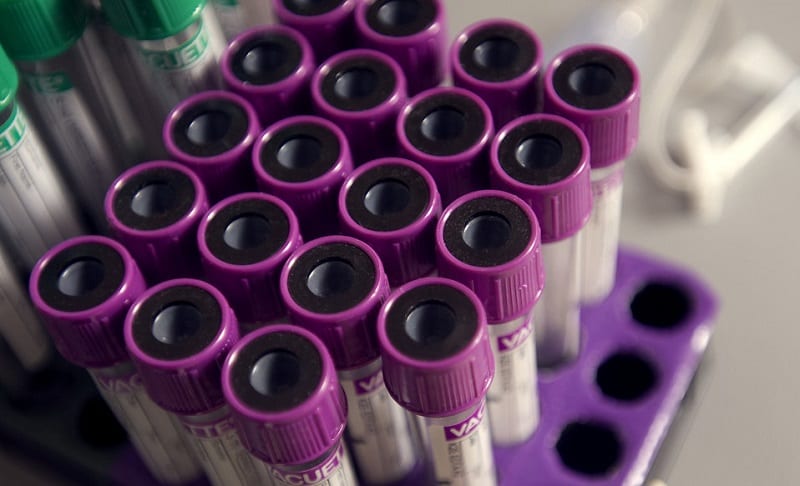

Glial Fibrillary Acidic Protein (GFAP*) Assay Kit
Our GFAP assay kit provides ultra-sensitive detection of Glial Fibrillary Acidic Protein in plasma and CSF for neurology research. Click…
Posted on
J NEUROTRAUMA. 2019. | OCTOBER 23, 2019
Tschiffely AE, Statz JK, Edwards K, Goforth CW, Ahlers S, Carr W and Gill J.
J Neurotrauma. 2019 Oct 23. doi: 10.1089/neu.2019.6512.
Mild traumatic brain injury (mTBI) is a risk for military personnel due to blast overpressures, which may result from a variety of sources, including artillery and improvised explosive devices. Much research has gone into the search for a biomarker to identify patients with a TBI. The FDA recently identified two proteins, glial fibrillary acidic protein (GFAP) and ubiquitin C-terminal hydrolase-L1 (UCH-L1), as biomarkers to evaluate suspected brain injury. Our group previously observed changes in UCH-L1 in a military population exposed to repeated blast. In our current study we assessed GFAP protein levels in a military population exposed to repeated blast during a 2-week training protocol. We observed GFAP levels were reduced in the moderate blast cases on days 6 and 7 during the training. Specifically, moderate blast cases showed a 24.07% reduction from baseline on day 6 and a 29.61% reduction on day 7. Furthermore, GFAP levels were negatively correlated with cumulative blast experienced during training and with duration of military service. We observed that repeated blast exposure at low levels may impact acute changes in GFAP. Additionally sub-acute cumulative blast exposure or duration of service was also a factor in influencing GFAP levels.
Poster Background Reliable and reproducible antibody barcoding is critical for spatial biology workflows onthe Akoya PhenoCycler®-Fusion 2.0 (PCF). We evaluated and optimized a complementarychemistry to the existing Antibody Conjugation Kit…
Neurology
Poster Background Developing effective therapies for glioblastoma (GBM) relies on robust preclinical animal models that enable detailed investigation of tumor biology, discovery of therapeutic targets, and evaluation of new treatment…
Oncology
Poster Background Ultrahigh-Plex Single-cell Spatial Phenotyping has revealed valuable insights into the tumor immune microenvironment (TiME) for biomarker discovery and stratification of clinical responses. Metabolic reprogramming is a key hallmark…
Neurology
Alzheimer’s Research and Therapy | August 26, 2024 Sampani K, Ness S, Tuz-Zahra F, Aytan N, Spurlock EE, Alluri S, Chen X, Siegel NH, Alosco ML, Xia W, Tripodis Y,…
Neurology
Poster The intersection of new therapeutic options for Alzheimer’s disease (AD), the emergence of accurate blood-based tests for AD, and the anticipated health system log jam for confirmatory diagnostic testing…
Neurology
Alzheimer’s & Dementia | August 3, 2024 Verberk IMW, Jutte J, Kingma MY, Vigneswaran S, Gouda MMTEE, van Engelen MP, Alcolea D, Arranz J, Fortea J, Lleó A, Chevalier C,…
Our GFAP assay kit provides ultra-sensitive detection of Glial Fibrillary Acidic Protein in plasma and CSF for neurology research. Click…